# REDEMPTION

## <mark style="color:green;">What is Redemption?</mark>

Redemption is a community-driven income generation project that operates a decentralized community-owned treasury and a suite of decentralized finance platforms (dApps) for crypto-powered Bonds, Staking, and Lottery to let you earn with no limitations.&#x20;

The main aim is to decentralize and crowdsource the modes of earnings and let you make money in easier ways without requiring any financial expertise, third-party involvements (like banks and govs), and exhaustive minimum threshold requirements that traditional finance puts in place as barriers for commoners.&#x20;

On top of it, the collective ownership & on-chain governance by the tokenholders truly democratizes the decision-making, wipes out the risks of fraud, and uses guilds to deploy suitable and motivated talent to perform the DAO operations.

The redemption project consists of Four vital components that are entwined together:

1. Redemption Token (RDTN) (A utility & Governance Token)
2. Redemption Puttable Bonds (RDBN).
3. Redemption Decentralized Platform/ DApp
4. Redemption DAO

{% embed url="<https://www.youtube.com/watch?v=VkKvlAeFOZg>" %}
REDEMPTION PROMO
{% endembed %}


# Redemption Token (RDTN)

What is Redemption Token?

Redemption token is a Layer-2, BEP-20 Type, “Utility Token”. Harnessing its usability from the BNB Smartchain, the Redemption token is an essential token used on the Redemption platform by any user to participate in a decentralized <mark style="color:green;">**Lottery**</mark>, <mark style="color:green;">**Staking**</mark>, and <mark style="color:green;">**Redemption DAO**</mark> bonds named Redemption Bonds.

Following are the Salient Features of Token.

1. It's a utility & Governance Token
2. Built on BNB Smart Chain
3. Provides proportionate governance & ownership rights
4. Available on DEX for Trading
5. Utilized for Participating in Lottery and Staking.&#x20;
6. Profits from bonds are also dispensed in RDTN form.
7. Low taxes and deflationary token.

<figure><img src="/files/oKGXYJPs5OGDsxP99biB" alt="Redemption Token | RDTN"><figcaption><p>Redemption Token</p></figcaption></figure>


# RDBN (Puttable Bonds)

What is RDBN?

Redemption Bonds work on ERC-3475 Puttable standard available on Ethereum Blockchain.&#x20;

Following are the Salient Features of RDBN are.

1. Unique on-chain crypto bond protocol based on ERC-3475 Standard.
2. Puttable means that bonds can be redeemed any time at their face value&#x20;
3. Stable Profits at maturity (3 months, 6 months, 9 months and 1 year)
4. Win Weekly prizes as an additional incentive to invest in bonds.
5. 100% backed by Assets in Redemption DAO Treasury

<figure><img src="/files/7G0NYyvPcUvC77f1UPIJ" alt="Redemption Bond Picture (Just illustration) - RDBN"><figcaption></figcaption></figure>


# Redemption Platform / dApps

Redemption is a De-fi platform (<mark style="color:green;">**a suite of dApps**</mark>) that lets its users earn with various investment options. You can make passive income in multiple ways on Redemption DApps running on the <mark style="color:green;">**BNB smart Chain**</mark> & <mark style="color:green;">**Ethereum blockchain**</mark>.&#x20;

Here are the Salient Features of Redemption dApps.&#x20;

1. De-Fi Platforms managed by Redemption DAO
2. Let you increase your governance rights with Redemption investment models.&#x20;
3. A suite of DApp to let users participate in <mark style="color:green;">**Redemption Bonds**</mark>, <mark style="color:green;">**Staking**</mark>, <mark style="color:green;">**Lottery**</mark>, and <mark style="color:green;">**Governance**</mark>.&#x20;
4. Let you manage your own Investment Portfolio at Redemption.


# Redemption DAO

Redemption DAO is the governing body of the entire Project. From funds management to decision making and decision implementation, everything is done by Redemption Community (RDTN tokenholders). &#x20;

Here are the Salient Features of Redemption DAO.&#x20;

1. Manifesto of Redemption DAO is to decentralize and crowdsource the modes of earning by adopting proposals generated by the community of RDTN Holders.
2. Redemption DAO is at the center of the Redemption Project. It <mark style="color:green;">**operates a treasury**</mark> to manage and allocate the financial resources of the project effectively.&#x20;
3. Create new proposals for improvements in the project or vote on existing proposals.&#x20;
4. Redemption uses the “SafeSnap” Plugin on “Snapshot”, which enables decentralized execution of crypto governance proposals, through on-chain execution of off-chain votes.

[**Read More About DAO**](/dao)


# How to Earn?

How to Make Money With Redemption?

Redemption offers 3 Easy approaches to earning unlimited money. From low to no-risk investment opportunities, we have described each one in detail so you know how to make money fast and easily.

### <mark style="color:green;">1. Redemption Bonds</mark>

Blockchain-powered savings protocol backed by Redemption Treasury. Keep your <mark style="color:green;">**principal amount 100% secure**</mark> & <mark style="color:green;">**get profit**</mark> on your Redemption bonds. SAVE money and also have a <mark style="color:green;">**chance to WIN Prizes**</mark> every week. Bonds can be redeemed at any time at their face value if you have an urgent need of funds elsewhere. ([**Read More**](/how-to-earn/redemption-bonds))&#x20;

### <mark style="color:green;">2. Staking</mark>

Redemption Token backs Redemption Bonds as collateral. Stake your RDTN to contribute towards token price stability. As a reward, earn more Redemption to increase your Governance & Dividend rights in Redemption Treasury. ([**Read More**](/how-to-earn/staking))

### <mark style="color:green;">3. Lottery</mark>

Unlike traditional lotteries, Redemption does not provide you with one in a million chances of winning a lottery. We have revolutionized the lottery world by offering <mark style="color:green;">5 different smart contract based lottery pools</mark> based on the active number of lottery players that can play in a pool thus increasing your chances of winning the jackpots.&#x20;

Start with <mark style="color:green;">**as low as \~5 USD**</mark> in Redemption and win millions. REDEMPTION smart contract draws a random number to determine the winners of each prize pool. Match the winning lottery number with your tickets. If they match, you will win. ([**Read More**](/how-to-earn/lottery))

The entire system is perfectly decentralized and works on smart contracts using blockchain technology, making it completely transparent without any risks of fraud.


# Redemption Bonds

What Are Redemption Bonds?

Win Through Savings

"Redemption bonds" is a revolutionary on-chain bonds protocol that offers puttable bonds with fixed profit rates at maturity and also provides the opportunity to win prizes on a weekly basis at each individual bonds level, providing an additional incentive to invest. These bonds are unique in a way that they offer the flexibility to redeem your bonds and receive your original principal at any time. Redemption bonds are similar to prize bonds but also offer fixed and competitive profit rates at maturity. They are developed using the ERC-3475 standard and run on the Ethereum blockchain.

### <mark style="color:green;">Puttable Bonds</mark>

Redemption bonds are puttable ERC-3475 Bonds, which means that investors have the option to sell their bonds at their par value, back to the Redemption Treasury before they reach maturity. The basic ERC-3475 contract does not have this feature, but it can be used as a foundation to create a Puttable ERC-3475 contract that incorporates the logic for putting bonds. This way, investors can take advantage of the flexibility that puttable bonds offer, while still benefiting from the features of the basic ERC-3475 contract.

The Puttable ERC-3475 contract inherits all methods and properties of the abstract storage bonds standard EIP-3475, which allows it to include the additional functionality required for putting bonds. By inheriting the basic ERC-3475 contract, the Puttable ERC-3475 contract also benefits from its reliability and security.

In a nutshell, Redemption Bonds are the most innovative and secure crypto bonds.&#x20;

Salient Features of Redemption Bonds are:

* <mark style="color:green;">Secured Principal:</mark> Keep your Principal 100% Secured as Bonds are backed by the assets in Redemption Treasury.&#x20;
* <mark style="color:green;">**Get Lucrative Returns:**</mark> Hold your Redemption bonds till maturity to get profits and earn through savings.
* <mark style="color:green;">**Win Prizes:**</mark> Get a chance to Win Weekly Prizes over and above your Principal Amount.
* <mark style="color:green;">**Redeemable Anytime:**</mark> You can redeem your bond and get your Principal back anytime you want at its face value.

### <mark style="color:green;">Redemption Bonds Denominations</mark>

You can get the Redemption bonds worth of (USD):

* $100 Denomination (4 Prize draws every month)
* $500 Denomination (2 Prize draws every month)
* $1,000 Denomination (1 Prize draw every month)
* $10,000 Denomination (1 Prize draw every 3 months)

Please note, these bonds can only be bought Redemption dApp.

### <mark style="color:green;">The Maturity Periods</mark>

* 3 Months
* 6 Months
* 9 Months
* 12 Months

**LONGER MATURITY PERIODS OFFER THE HIGHER PROFIT RATES.**<br>


# Features

Redemption Bonds Features

* <mark style="color:green;">**Non-fungible:**</mark> Not like any form of ERC-20 LP token, a with different nonce is not mutually interchangeable, hence not fungible.
* <mark style="color:green;">**Multi-dimensional:**</mark> Each ERC3475 Redemption Bond stores an array of integers, not like an ERC-20 token can store only a mapping from an address to a balance. This feature is used to store redemption conditions and different interest rates.
* <mark style="color:green;">**Gas-efficient:**</mark> Current existing fragmentation of LP or NFT use ERC-20 token standard. This means each fragmentation of NFT or LP needs the deployment of a new smart contract. Thus generate an unnecessary gas expense.
* <mark style="color:green;">**Multiple fragments:**</mark> Because of the high gas spent, the current fragmentation systems must limit the number of classes and sub-categories generated. ERC-3475 can in turn generate almost countless classes and sub-categories without the need to publish a new smart contract.
* <mark style="color:green;">**Puttable:**</mark> the debts that a Redemption Bond represents must be fulfilled when the conditions are met. It can be a fixed amount of repayment or any floating interest based on a predetermined index factor.
* <mark style="color:green;">**Obligated:**</mark> ERC-3475 obliges both the Redemption Treasury and the creditors to fulfill their promise. This feature can be used to make sure that the Liquidity will not be emptied suddenly. In return, the Redemption Treasury will ensure the promised yield.
* <mark style="color:green;">**Marketable:**</mark> Debond is itself a financial product that will be allowed to be exchanged on a secondary market in the later phase of the project.

<br>


# Redemption Bonds Prizes & Lucky Draw Periods

* Simply, higher prizes for higher denomination bonds.
* All Series of same denomination bonds offer equal sized prizes.&#x20;

<table><thead><tr><th width="157" align="center">Bond Denomination</th><th>$100</th><th>$500</th><th>$1,000</th><th>$10,000</th></tr></thead><tbody><tr><td align="center"><strong>Prize Money</strong></td><td>$1,000</td><td>$5,000</td><td>$10,000</td><td>$100,000</td></tr><tr><td align="center"><strong>Lucky Draw Happens</strong></td><td>Weekly</td><td>Fortnightly</td><td>Once a Month</td><td>Once Every 3 Months</td></tr><tr><td align="center"><strong>Number of Series/Draws Per Month</strong></td><td>4</td><td>2</td><td>1</td><td>0</td></tr><tr><td align="center"><strong>Number of Series/Draws Per 3 Months</strong></td><td>(4*3) = 12</td><td>(2*3) = 6</td><td>(1*3) = 3</td><td>1</td></tr></tbody></table>


# Bond Serial Number & Important Terms

### <mark style="color:green;">Bond Serial Number</mark>

Every Redemption bond has a serial number on it that is the unique identity of every bond.

**(Bond Series) (Bond denomination) (4 digit serial Number)**

**(A)                                     (100)                                   (6917)**

In the example given above,

* “A” depicts that it’s the Series A of the bond.&#x20;
* “100” states that it is a 100 Denomination Bond.&#x20;
* While the 4 digit number “6917” is actually the unique serial number

On your Bond, the serial number (used in the above example) will look like this:&#x20;

<mark style="color:green;">**A1006917**</mark>

If your serial number matches the winning number drawn at the lucky draw, you win.&#x20;

<figure><img src="/files/67VVBqtKG63GEYRRCMnl" alt="Redemption Bond Picture"><figcaption><p>Redemption Bond NFT</p></figcaption></figure>

### <mark style="color:green;">**Understanding Important Terms**</mark>

<mark style="color:green;">**Bonds Series:**</mark> Series means the number of lucky draws happening in a particular time. For instance, the Redemption bond of 100 Denomination has 4 series per month. It means that there are 4 lucky draws every month While the Bond of 10,000 has 1 series every 3 months. It means that there is 1 lucky draw every 3 months.&#x20;

Each Redemption bond series is designed in a way that it has only one chance of being in a lucky draw at a monthly scale. Smaller denomination bonds have a higher frequency of lucky draws in any given month.&#x20;

<mark style="color:green;">**Issuing Date:**</mark> Issuing date is the date from which the issuance of bonds for a particular series of bonds starts. You can purchase your bonds from the issuing date till the locking period starts.

<mark style="color:green;">**Locking Period:**</mark> Locking period is the time duration after issuance of bonds and before the lucky draw during which the sale or transfer of a bond makes it ineligible for winning the prize, even if its number is successfully drawn from a VRF function.&#x20;

<mark style="color:green;">**Holding Period:**</mark> The holding period is the time duration after the issuance of bonds and before the maturity of the 3 to 12-month period (as chosen by the bondholder) during which you have to hold your bond to get APR.&#x20;

&#x20;                     <mark style="color:green;">**Note:**</mark> The key difference between Locking and the holding period is that during the locking period, you have to hold your bond till the lucky draw to be eligible for the lucky draw prize. While in the case of a holding period, you have to hold your bond from the date of issuance till the maturity date of the bond to get APR.

<mark style="color:green;">**Lucky Draw Date:**</mark> It is the date when the lucky draw happens and the winner gets the reward. After this date, you can sell your bonds if you do not win.


# Bonds Issuing, Locking & Lucky Draw Dates

Each bond denomination will have multiple series that will have a different draw date and a holding period eligibility. Every bond has a locking period after which you cannot participate in that series lucky draw. But you can participate in the next series draw. Holding period is smaller for smaller denomination bonds and higher for higher denomination bonds.

### <mark style="color:green;">1.</mark> <mark style="color:green;">$100 Denomination Bond</mark>

Each Month, there are 4 lucky Draws of 100 Denomination bonds.

| Series              | Series A                      | Series B                       | Series C                        | Series D                        |
| ------------------- | ----------------------------- | ------------------------------ | ------------------------------- | ------------------------------- |
| **Issuing Period**  | 1st to 5th day of every Month | 6th to 12th day of every Month | 13th to 19th day of every Month | 20th to 26th day of every Month |
| **Locking Date**    | 5th of every Month            | 12th of every Month            | 19th of every Month             | 26th of every Month             |
| **Lucky Draw Date** | 8th of the Following Month    | 15th of the Following Month    | 22nd of the Following Month     | 30th of the Following Month     |

***Note:*** *Actual issuance period, locking and lucky draw dates will be published on the DApp for each series of every denomination bond.*

Let’s say today is 1st November, 2022. The bond has a Lucky Draw date of its first series on 8th December, 2022. Then the last day to participate in that series is 5th November.&#x20;

After that, the bonds will be locked till Lucky Draw. But you can participate in the 2nd series of bonds, which has a Lucky Draw on 15th December, 2022. In this case, the last date to participate in this series is 12th November. After that, you can participate in the next series and so on.&#x20;

This way, you can purchase a bond and participate whenever you want.

The process remains the same when you purchase Bonds of $500, $1,000, & 10,000 but the locking date and Lucky Draw date change as follows:

### *<mark style="color:green;">2.</mark>* <mark style="color:green;"></mark><mark style="color:green;">$500 Denomination Bond</mark>

| Series              | Series A                        | Series B                        |
| ------------------- | ------------------------------- | ------------------------------- |
| **Issuing Period**  | 1st to 15th Day of Every Month  | 16th to 30th Day of Every Month |
| **Locking Date**    | 15th Day of a month             | 30th Day of a Month             |
| **Lucky Draw Date** | 15th Day of the following month | 30th of Following Month         |

***Note:*** *Actual issuance period, locking and lucky draw dates will be published on the DApp for each series of every denomination bond.*

### <mark style="color:green;">3. $1,000 Denomination Bond</mark>

| Series              | Series A                        |
| ------------------- | ------------------------------- |
| **Issuing Period**  | 1st to 30th Day of Every Month  |
| **Locking Date**    | 30th Day of a month             |
| **Lucky Draw Date** | 30th Day of the Following Month |

**Note:** Actual issuance period, locking and lucky draw dates will be published on the DApp for each series of every denomination bond.

### <mark style="color:green;">4. $10,000 Denomination Bond</mark>

| Series              | Series A                                                                     |
| ------------------- | ---------------------------------------------------------------------------- |
| **Issuing Period**  | 1st one and a Half Month of the Quarter (before the start of locking period) |
| **Locking Date**    | 45 Days before Lucky draw Date                                               |
| **Lucky Draw Date** | 30th Day of every third Month                                                |

**Note:** Actual issuance period, locking and lucky draw dates will be published on the DApp for each series of every denomination bond.


# How Do Redemption Bonds Work?

* Buy Redemption Tokens From Liquidity Pools via your Wallet
* Use Redemption Tokens to buy Redemption Bonds. You can buy up to unlimited bonds to increase your chances of winning.
* Participate in Different denomination bonds with lucky draws at pre-defined periods every week and month
* Wait for the draw & check for prizes. The winning number is drawn through Chainlink’s VRF Function.
* Redeem winnings from Bonds & withdraw won REDEMPTION tokens to your wallet Cashout or start again to earn more.

**Note:** For every Bond transaction, 1% fee will be charged by Redemption DApp, which is over and above the transaction. For instance, on a purchase of a $100 Redemption bond, you will be paying $101.

But there's good news. If you hold your bond for 3 months, you will not have to pay any fee on selling it. Besides that, the 1% fee you paid when purchasing the bond, will also be returned into your wallet.

### <mark style="color:green;">How The Winning Number is Drawn?</mark>

Bond Lucky draws require randomness to create unpredictable, fair, and tamper proof drawings and distribution of the rewards.

Like lottery, Redemption utilizes Chainlink’s Verifiable Random Function (VRF) service in Bonds for generating randomness of a matching number for the winning ticket to guarantee fair and auditable rewards distribution and user engagement.


# Why Redemption bonds?

Here are a few things that make investments in Redemption Bonds the best investment ever.

1. <mark style="color:green;">**Higher Returns Than Market:**</mark> Redemption Bonds offer the potential for high returns compared to traditional bonds, thanks to the volatility of the cryptocurrency market.
2. <mark style="color:green;">**Win Prizes:**</mark> Redemption offers investors the opportunity to win prizes on a weekly basis, providing an additional incentive to invest.
3. <mark style="color:green;">**Transparency:**</mark> Redemption Prize draws are 100% transparent with no involvement of any person because it works on a smart contract and you can track your investment in real-time and have access to detailed information about the bond.
4. <mark style="color:green;">**No Middlemen:**</mark> Investing in Redemption Bonds means cutting out middlemen such as banks or brokers, resulting in lower fees and costs.
5. <mark style="color:green;">**Secured:**</mark> Onchain crypto bonds are secured by blockchain technology, which provides an added layer of security and transparency.
6. <mark style="color:green;">**Redeemable Anytime:**</mark> Our on-chain crypto bonds can be redeemed at any time, giving you greater flexibility and control over your investment.
7. <mark style="color:green;">**Non-Custodial:**</mark> You are the owner of your deposited funds at any given time and no other person in the world can access your funds. Redemption is non-custodial. It means that you can redeem your money whenever you want.&#x20;
8. <mark style="color:green;">**Open-Source Contract:**</mark> The entire code of the smart contract is open-source. You can read and verify the contract anytime to see how the entire system is automatically working.&#x20;
9. <mark style="color:green;">**Backed By Treasury:**</mark> All issued Redemption Bonds are 100% backed by the assets owned by Redemption Treasury using an algorithm, providing security to bondholders.&#x20;
10. <mark style="color:green;">**High Potential:**</mark> The crypto bond market is an emerging market, which means there are opportunities to invest early and potentially reap significant rewards as the market grows.


# Technical Specifications

<table data-view="cards"><thead><tr><th></th><th></th><th></th></tr></thead><tbody><tr><td></td><td><a href="https://docs.redemptiontoken.com/how-to-earn/redemption-bonds/technical-specifications/issuance-of-redemption-bonds">Issuance of Redemption Bonds</a></td><td></td></tr><tr><td></td><td><a href="https://docs.redemptiontoken.com/how-to-earn/redemption-bonds/technical-specifications/collateral-pool-management">Collateral Pool Management</a></td><td></td></tr><tr><td></td><td><a href="https://docs.redemptiontoken.com/how-to-earn/redemption-bonds/technical-specifications/collateral-size-determination-and-oracle">Collateral Size Determination &#x26; Oracle</a></td><td></td></tr><tr><td><p></p><p><a href="/pages/FhffOBRL9paLiQsu1a2W">Management of Bonds</a></p></td><td></td><td></td></tr><tr><td></td><td><a href="/pages/TSlZfzTKtwz1S6wwjMGw">Redemption of Bonds</a></td><td></td></tr><tr><td></td><td><a href="/pages/jABjy4FX5tni1Q2Y6eWM">Prize Pool Calculation</a></td><td></td></tr><tr><td><p></p><p></p><p><a href="/pages/JaFM2xWI4d3YbEXJgZyJ">Burning The Bonds</a></p></td><td></td><td></td></tr><tr><td></td><td><p></p><p><a href="/pages/ktMbLxmT7lr1nGrgFiRc">Redemption Bonds Workflows</a></p></td><td></td></tr></tbody></table>


# Issuance of Redemption Bonds

To manage the issuance and redemption of Redemption Bonds, a smart contract will be deployed on the Ethereum blockchain. The smart contract will have functions for issuing new bonds, redeeming bonds, and managing the collateral pool.

When a new bond is issued, the smart contract will calculate the required amount of collateral based on the denomination of the bond. The formula for calculating the required collateral is:

| **requiredCollateral = bondDenomination / (1 - collateralizationRatio)** |
| ------------------------------------------------------------------------ |

Where bondDenomination is the face value of the bond and collateralizationRatio is the ratio of collateral to bond value (e.g., 1.0 for a 100% collateralization ratio).<br>


# Collateral Pool Management

What is Collateral Pool and How Will it be Managed?

The collateral pool is a specific pool in Redemption Treasury that will be managed by the smart contract. It will hold the collateral assets in a separate pool. The smart contract will have functions for adding and removing collateral from the pool. To ensure the bonds are fully collateralized, the smart contract will only allow bonds to be issued if there is sufficient collateral in the pool.

The collateral pool will be managed by smart contract and the Redemption DAO Treasury. The collateralized assets will be locked in a special pool, which will be audited periodically to ensure that it is fully backed by the issued bonds. The pool will be monitored to ensure that it is always collateralized at the appropriate ratio. If the collateralization ratio falls below the required level, the Redemption DAO will need to add more assets to the pool to bring it back up to the required level.

The smart contract uses an automated monitoring system to constantly check the collateralization ratio of the bonds pool. If the ratio falls below the required level, the smart contract will trigger an event to alert the Redemption DAO that additional assets need to be added to the pool.

To implement this function in the smart contract, we will define a minimum collateralization ratio threshold variable, such as <mark style="color:green;">**`‘MIN_COLLATERALIZATION_RATIO’`**</mark>. We can also define a function, <mark style="color:green;">**`‘checkCollateralizationRatio()’`**</mark>, that calculates the current collateralization ratio and compares it to the <mark style="color:green;">**`‘MIN_COLLATERALIZATION_RATIO’`**</mark>. If the ratio falls below this threshold, the function will trigger an event to alert the Redemption DAO administration to add more assets to the pool.

Here is an example of how this function might be implemented in Solidity:

{% code title="Collateral Pool Management" overflow="wrap" lineNumbers="true" %}

```solidity
uint256 public constant MIN_COLLATERALIZATION_RATIO = 1e18; // minimum collateralization ratio threshold (1:1)

function checkCollateralizationRatio() public view returns (bool) {
    uint256 totalValueLocked = calculateTotalValueLocked(); // calculate the total value of assets locked in the pool
    uint256 totalDebt = calculateTotalDebt(); // calculate the total value of bonds issued
    uint256 collateralizationRatio = totalValueLocked / totalDebt; // calculate the current collateralization ratio

    if (collateralizationRatio < MIN_COLLATERALIZATION_RATIO) {
        emit CollateralizationRatioBelowThreshold(totalValueLocked, totalDebt, collateralizationRatio); // trigger an event to alert the Redemption DAO
        return false;
    }

    return true;
}

```

{% endcode %}

In this example, the <mark style="color:green;">**`‘calculateTotalValueLocked()’`**</mark> and <mark style="color:green;">**`‘calculateTotalDebt()’`**</mark> functions would be implemented to calculate the total value of assets locked in the pool and the total value of bonds issued, respectively. If the current collateralization ratio falls below the <mark style="color:green;">**`‘MIN_COLLATERALIZATION_RATIO’`**</mark>, the function will trigger an event (such as ‘CollateralizationRatioBelowThreshold’) to alert the Redemption DAO that additional assets need to be added to the pool.


# Collateral Size Determination & Oracle

How Will The Collateral Size Determined Against The Issued Bonds?

To determine the price of RDTN tokens and how many tokens to lock in the collateral pool, an oracle will be used. The oracle will provide a price feed for RDTN and the smart contract will use this price to calculate the required amount of RDTN tokens to lock in the collateral pool. The formula for calculating the required amount of RDTN tokens is:

| requiredRDTN = requiredCollateral / RDTNPrice |
| --------------------------------------------- |

Where RDTNPrice is the current price of RDTN as provided by the oracle.

For example, if the collateralized assets are $100,000 and the current price of RDTN tokens is $0.10, the amount of RDTN tokens required to be locked in the pool will be 1,000,000 RDTN tokens.

here's an example of how the oracle integration function will look like in Solidity programming language:

{% code title="Collateral Size Determination" overflow="wrap" lineNumbers="true" %}

```solidity
// Importing the required contracts and libraries
import "@chainlink/contracts/src/v0.8/interfaces/AggregatorV3Interface.sol";

// Defining the contract for RDTN price oracle
contract RDTNPriceOracle {
    
    // Defining the aggregator contract for RDTN price feed
    AggregatorV3Interface internal priceFeed;
    
    // Constructor function to set the RDTN price feed contract address
    constructor() public {
        priceFeed = AggregatorV3Interface(0x9326BFA02ADD2366b30bacB125260Af641031331);
    }
    
    // Function to get the current RDTN price in USD
    function getRDTNPrice() public view returns (uint256) {
        (
            uint80 roundID, 
            int256 price,
            uint256 startedAt,
            uint256 timeStamp,
            uint80 answeredInRound
        ) = priceFeed.latestRoundData();
        return uint256(price);
    }
    
    // Function to calculate the amount of RDTN to be locked in collateral pool
    function calculateCollateralAmount(uint256 totalBondAmount) public view returns (uint256) {
        uint256 rdtPrice = getRDTNPrice();
        uint256 collateralAmount = totalBondAmount * rdtPrice / 1e18;
        return collateralAmount;
    }
    
}

```

{% endcode %}

In this example, we are using the Chainlink AggregatorV3Interface to fetch the latest RDTN price feed data. We set the RDTN price feed contract address in the constructor function, and then define a <mark style="color:green;">**`‘getRDTNPrice()’`**</mark> function to return the current RDTN price in USD.

We also define a <mark style="color:green;">**`‘calculateCollateralAmount()’`**</mark> function that takes the total bond amount as input and uses the RDTN price to calculate the amount of RDTN tokens that need to be locked in the collateral pool to back the bonds at a 1:1 ratio. This function will be called by the smart contract to determine the amount of collateral to be locked in the pool.

We can further integrate these functions in our smart contract, along with other functions and workflows that we have discussed earlier, to create a fully functional Redemption Bonds system on the blockchain.


# Management of Bonds

How Will Redemption Bonds Be Managed?

Although most of the work will be done by smart contracts a guild will be made to oversight the entire management process. Its members will be elected by Redemption Tokenholders and will consist of members who have expertise in bond management, finance, and blockchain technology. They will also oversee the automated monitoring system and will be responsible for adding more assets to the collateral pool if the collateralization ratio falls below the required level.&#x20;

The Redemption Bonds Guild will provide regular reports to the Redemption DAO and the Bondholders to ensure transparency and accountability. These reports will include information about the collateralization ratio, the amount of assets in the Redemption Treasury, and the status of outstanding Bonds.&#x20;

the Redemption Bonds Guild will play a critical role in ensuring that the Bonds are managed in a secure and responsible manner. They will work closely with the smart contracts to ensure that the Bonds are always backed by the assets in the Redemption Treasury and that Bondholders are able to redeem their Bonds at maturity.


# Redemption of Bonds

How Will Bonds Be Redeemed (Both Before and At Maturity)

### <mark style="color:green;">Before Maturity</mark>

To redeem a bond before maturity, the bondholder will use the Redemption Bonds dApp, which will call the redeem function on the smart contract and specify the number of bonds they wish to redeem. The smart contract will then transfer the face value of the bonds to the bondholder's account and release the required collateral from the collateral pool. The formula for calculating the required collateral to release is:

| requiredCollateral = redeemedBonds \* bondDenomination \* collateralizationRatio |
| -------------------------------------------------------------------------------- |

Where redeemedBonds is the number of bonds being redeemed.

### <mark style="color:green;">At Maturity</mark>

To redeem a bond at maturity, the bondholder can simply hold onto the bond until it reaches maturity. At maturity, the bondholder will call the redeem function on the smart contract and the face value of the bond and Profits earned will be transferred to the bondholder's account.

When a bondholder wants to redeem their bond at maturity, they can simply call the redeem function on the smart contract using dApp. The smart contract will then calculate the face value of the bond and the profits earned based on the bond's denomination and the maturity period. The profit calculation is based on a fixed rate of return for a fixed period. The smart contract uses a formula to calculate the profit based on the face value of the bond, the profit rate, and the maturity period. The formula for calculating profit is:

| Total Transferable Value  = Denomination \* (1 + Profit Rate \* Maturity Period) |
| -------------------------------------------------------------------------------- |

Where:

<mark style="color:green;">**`‘Denomination’`**</mark> is the value of the bond denomination

<mark style="color:green;">**`‘Profit Rate’`**</mark> is the fixed profit rate offered by the Redemption Bonds

<mark style="color:green;">**`‘Maturity Period’`**</mark> is the number of days between the issuance date and maturity date

<br>


# Prize Pool Calculation

The Bonds prize pool is funded by:

* A portion of the tax collected on every transaction of RDTN tokens,
* Returns from DAO investments, and&#x20;
* Unclaimed prize amounts from unwon lottery pools.&#x20;

Specifically, a certain percentage of the 3% tax collected on every transaction will be allocated to the prize pool, along with any unclaimed prizes from unwon lottery pools and returns from the DAO's investment portfolio.

To calculate the prize pool for each bond issuance, we use the following formula:

*<mark style="color:green;">**PC = (TC × P%) / 100 + RC + IC**</mark>*

Where:

<mark style="color:green;">**PC**</mark> = prize pool for the bond issuance

<mark style="color:green;">**TC**</mark> = total RDTN transaction volume during the bond period

<mark style="color:green;">**P%**</mark> = percentage of transaction tax allocated to prize pool (i.e. 15%)

<mark style="color:green;">**RC**</mark> = unclaimed prize amounts from previous bond issuances

<mark style="color:green;">**IC**</mark> = returns from the DAO's investment portfolio

<br>


# Burning The Bonds

What Happens to The Issued Bonds After They Are Redeemed?

After a bond is redeemed at maturity, it will no longer be valid, and the Redemption DAO needs to remove it from circulation to maintain the integrity of the system. This is accomplished through a process called "burning."

The bondholder will initiate the process by calling the redeem function on the smart contract, which will verify that the bond is valid and has not been previously redeemed. The contract will then calculate the total amount to be paid to the bondholder, which will be the face value of the bond plus the profits earned.

Once the total amount to be paid has been calculated, the smart contract will transfer the funds to the bondholder's wallet. At the same time, the smart contract will burn the redeemed bond. This is achieved through the use of the burn function in the smart contract, which will destroy the token and remove it from circulation.

Burning is done by sending the redeemed bond to a specific address, often referred to as the "burn address." This is an address that is hardcoded into the smart contract and is not associated with any user or organization. Any bonds sent to this address are cannot be accessed by anyone. Any tokens sent to this address are considered "burned" and are removed from circulation permanently.

The burn function works by subtracting the balance of the redeemed bond from the total supply of bonds. This reduces the number of bonds in circulation and ensures that the number of bonds in the pool always matches the number of assets held in the Redemption Treasury. The mechanism behind burning ensures that the supply of bonds is kept in check and prevents the dilution of the value of the bonds.

<br>


# Redemption Bonds Workflows

Based on all the aforementioned specifications of Redemption Bonds, here is a graphical representation of Bonds Issuance, collateralization, & Redemption process.

<figure><img src="/files/1Ew1Fnk7E1TgBPBj0utr" alt="Redemption Bonds Purchasing and Redeem Process"><figcaption></figcaption></figure>


# Staking

<mark style="color:green;">**Earn Rewards Holding Redemption Tokens**</mark>

RDTN is a governance token that provides you with voting rights & dividends proportional to your holdings. Stake your Redemption to strengthen the protocol & <mark style="color:green;">**earn rewards at a higher APR**</mark> which increases your RDTN holdings, ultimately <mark style="color:green;">**increasing your Governance**</mark>**&#x20;&&#x20;**<mark style="color:green;">**Dividend rights in Redemption Treasury**</mark>.&#x20;

Redemption offers fixed-period staking pools. These staking pools are used to incentivize the blocking of redemption tokens by giving rewards to you for participating in these pools.&#x20;

This is a perfectly automated system that manages rewards with weighted averages that not only take into account the time during which the tokens have been allocated in the pool but also consider the total amount of tokens paid in.&#x20;

The staking period is fixed at the creation of each pool which blocks the token’s sale in the pool's smart contract. Once the staking period ends, the reward in tokens is distributed, according to the weighted average system. The accrued reward can be requested directly via the smart contract function which is connected to the web app GUI.

{% embed url="<https://youtu.be/hsOI9f8FVfs>" %}
Staking With Redemption
{% endembed %}


# Staking Pools Duration

Redemption offers multiple staking periods. Here are they. &#x20;

* <mark style="color:green;">**Short Term Staking Period**</mark> (1 Month)&#x20;
* <mark style="color:green;">**Medium Term Staking Period**</mark> (3 Months and 6 Months)&#x20;
* <mark style="color:green;">**Long Term Staking Period**</mark> (1 Year, 2 years, and 3 Years)

*<mark style="color:green;">**Note:**</mark>* The Longer You Stake, the Higher APR you get. Not only it increases the number of staked tokens but also <mark style="color:green;">**increases your Voting**</mark> & <mark style="color:green;">**Governance rights**</mark> proportionately.&#x20;


# Why Stake Redemption Tokens?

Staking isn't just about earning lucrative rewards. There's much more than that. Here's why it's best to Stake your RDTN.&#x20;

### <mark style="color:green;">1. Earn Passive Income</mark>

Earn regular rewards simply by holding your token and supporting the supporting redemption treasury. So make your investment work for you without having to actively trade.

### <mark style="color:green;">2. Get Higher Returns</mark>

Redemption Staking offers higher returns than traditional savings accounts or other investment options.

### <mark style="color:green;">3. Increase Your Governance Rights</mark>

As every tokenholder has voting and governance rights proportional to their RDTN holdings, Staking your tokens will passively grow your rights in DAO because regular profits grow your holdings significantly.&#x20;

### <mark style="color:green;">4. Hedge Against Inflation</mark>

Protect your Funds against inflation, as your rewards will increase over time passively.&#x20;

### <mark style="color:green;">5. No Minimum Investment Requirements</mark>

Unlike some other investment options, staking has no minimum investment requirement. This means that anyone can participate, regardless of their financial situation.


# How To Earn With Staking?

Here is how it works:&#x20;

1. Create your wallet and connect it with our Redemption token.&#x20;
2. Buy Redemption Tokens from Liquidity Pools via your Wallet
3. Lock Your tokens in any fixed period staking pool on our dApp to earn the desired APR on your token. Each staking period also highlights the reward (APR) you will be getting at the end of the period. The longer you stay, the better rewards you get. Hence, choose accordingly.&#x20;
4. Automatically get your reward on the Lucky Draw of the staking period.&#x20;
5. You will get your principal tokens (i.e., your original investment) as well as reward tokens in Your Wallet (depending on your staking period).&#x20;
6. Cash-out or Start again to earn more.


# Lottery

What is Redemption Lottery?

<mark style="color:green;">**100% Decentralized Lottery & Prize Pools**</mark>

Redemption offers the first-ever blockchain-based lottery to offer 5 Different Lottery pools based on the number of digits to be matched to be deemed a winner.&#x20;

From 5 Digit match pool (which offers the <mark style="color:green;">**highest reward**</mark> but <mark style="color:green;">**low winning chances**</mark>) to 1 digit match pool (which offers <mark style="color:green;">**low reward**</mark> but <mark style="color:green;">**highest Wining chances**</mark>), choose your tradeoff between the Highest chances or the Highest reward. You can start for as low as $5 worth of RDTN.&#x20;

The Redemption lottery will run on a blockchain-based smart contract. The best thing about switching to a blockchain for a customer is the reliability, security, and transparency of the system.&#x20;

In simple terms, what it means is that you do not have to trust any neutral third party (the “house”) to organize the game. The best thing about this system is that all the rules of the game are predefined in the form of a smart contract.

### <mark style="color:green;">**Benefits Of Decentralized Lottery**</mark>

* All the rules are predefined and are automatically executed, so there is no chance of cheating.&#x20;
* As the system is running on blockchain, no one can tamper with the rules. (NOT even the developer).&#x20;
* No one can disappear with your money.&#x20;
* There is complete transparency in the competition rules because the rules are written on a smart contract and allow you to see the rules.&#x20;
* Anyone can participate, regardless of their location or financial situation.
* We have lower minimum bet amounts, making the lottery accessible to everyone.

### <mark style="color:green;">**Lottery Specs**</mark>

* Each Lottery ticket costs: \~5 USD in Redemption tokens (RDTN).&#x20;
* There is no overall limit to the number of lottery tickets.&#x20;
* Each ticket has a random 6-digit combination with each digit between 0-9 numerical numbers.&#x20;
* For security and randomness of a matching number for the winning ticket, the Redemption lottery utilizes Chainlink's implementation of a Verifiable Random Function (VRF).

{% embed url="<https://youtu.be/I_th0u9pLrQ>" %}
What is Redemption Lottery and How Does It Work?
{% endembed %}


# Lottery Pools & Probability to Win

### <mark style="color:green;">**Multiple Digit Lotteries (Highest Winning Chances)**</mark>

Redemption offers a total of 5 different types of lottery pools. These includ&#x65;**:**

* 1 Digit Prize Pool (Only 1 Winner with an overall probability of 1/10)
* 2 Digit Prize Pool (Max 10 Winners with an overall probability of 10/100)
* 3 Digit Prize Pool (Max 10 Winners with an overall probability of 10/1,000)
* 4 Digit Prize Pool (Max 109 Winners with the overall probability of 109/10,000)
* 5 Digit Prize Pool (Max 109 Winners with the overall probability of 109/100,000)

Each Pool can have multiple winners except the 1 Digit Match pool. Hence, the Redemption lottery has the highest chances of winning for any participant. Here are the details of all Lottery pools.&#x20;

<table><thead><tr><th width="106">Reward Scale in Max Sale</th><th width="105">Matching Numbers to win lottery's 1st Prize</th><th>Price per ticket</th><th width="106">Lucky Draw Happens</th><th>No. of Lucky Draws Per Month</th><th width="95">Max no of tickets that can be sold</th><th width="129">Max Prize</th><th>Total Fee Collection</th></tr></thead><tbody><tr><td></td><td></td><td></td><td></td><td></td><td><strong>In Case</strong></td><td><strong>of   Max</strong></td><td><strong>Sales</strong></td></tr><tr><td>9 Times Investment</td><td>1</td><td>$100</td><td>Every Day</td><td>30-31</td><td>10</td><td>$900</td><td>$100</td></tr><tr><td>90 Times Investment</td><td>2</td><td>$50</td><td>Every Day</td><td>30-31</td><td>100</td><td>$4,500</td><td>$500</td></tr><tr><td>900 Times Investment</td><td>3</td><td>$20</td><td>Every Week</td><td>4</td><td>1,000</td><td>$18,000</td><td>$2,000</td></tr><tr><td>9000 Times Investment</td><td>4</td><td>$10</td><td>Every Fortnight</td><td>2</td><td>10,000</td><td>$90,000</td><td>$10,000</td></tr><tr><td>90000 Times Investment</td><td>5</td><td>$5</td><td>Every Fortnight</td><td>2</td><td>100,000</td><td>$450,000</td><td>$50,000</td></tr><tr><td></td><td></td><td></td><td></td><td></td><td></td><td></td><td></td></tr><tr><td><strong>TOTAL</strong></td><td></td><td></td><td></td><td><strong>68-70</strong></td><td></td><td><strong>$563,400</strong></td><td>$62,600</td></tr></tbody></table>

### <mark style="color:green;">High Probability to Win</mark>

From single to 5 Digit match lotteries, multiple lottery pools with multiple winning prize brackets significantly increase your chances of winning a lottery. Here is your probability of winning in each Lottery pool.

<table><thead><tr><th> </th><th width="115">Probability</th><th> </th><th width="109">To</th><th width="84"> </th><th width="101">Win</th><th> </th></tr></thead><tbody><tr><td></td><td><strong>1 Digit Match</strong></td><td><strong>2 Digit Match</strong></td><td><strong>3 Digit Match</strong></td><td><strong>4 Digit Match</strong></td><td><strong>5 Digit Match</strong></td><td><strong>Overall Probability</strong></td></tr><tr><td><strong>1 Digit Pool</strong></td><td>1/10</td><td>N/A</td><td>N/A</td><td>N/A</td><td>N/A</td><td>1/10</td></tr><tr><td><strong>2 Digit Pool</strong></td><td>9/100</td><td>1/100</td><td>N/A</td><td>N/A</td><td>N/A</td><td>10/100</td></tr><tr><td><strong>3 Digit Pool</strong></td><td>No Reward</td><td>9/1,000</td><td>1/1,000</td><td>N/A</td><td>N/A</td><td>10/1,000</td></tr><tr><td><strong>4 Digit Pool</strong></td><td>No Reward</td><td>99/10,000</td><td>9/10,000</td><td>1/10,000</td><td>N/A</td><td>109/10,000</td></tr><tr><td><strong>5 Digit Pool</strong></td><td>No Reward</td><td>No Reward</td><td>99/100,000</td><td>9/100,000</td><td>1/100,000</td><td>109/100,000</td></tr></tbody></table>


# Lottery Pool Value & Prize Distribution

The amount of tokens collected through lottery tickets in a given lottery is managed as follows:

* 10% goes to the fees for ecosystem development.
* 90% of the collected value is the eligible distribution prize, which will be divided among the different winning brackets as follows:

<table><thead><tr><th width="137">Pool Type</th><th width="163">1 Digit Match Winner</th><th width="157">2 Digit Match Winner</th><th>3 Digit Match Winner</th><th>4 Digit Match Winner</th><th>5 Digit Match Winner</th></tr></thead><tbody><tr><td><strong>1 Digit Pool</strong></td><td>100%</td><td><mark style="color:red;">N/A</mark></td><td><mark style="color:red;">N/A</mark></td><td><mark style="color:red;">N/A</mark></td><td><mark style="color:red;">N/A</mark></td></tr><tr><td><strong>2 Digit Pool</strong></td><td>30%</td><td>70%</td><td><mark style="color:red;">N/A</mark></td><td><mark style="color:red;">N/A</mark></td><td><mark style="color:red;">N/A</mark></td></tr><tr><td><strong>3 Digit Pool</strong></td><td>0%</td><td>30%</td><td>70%</td><td><mark style="color:red;">N/A</mark></td><td><mark style="color:red;">N/A</mark></td></tr><tr><td><strong>4 Digit Pool</strong></td><td>0%</td><td>10%</td><td>20%</td><td>70%</td><td><mark style="color:red;">N/A</mark></td></tr><tr><td><strong>5 Digit Pool</strong></td><td>0%</td><td>0%</td><td>10%</td><td>20%</td><td>70%</td></tr></tbody></table>

If in case, a lottery round is not won by any participant, some portion of the prize money is carried forward to the next round and the rest is collected as a dividend for the token holders. The distribution of this prize money is utilized as under:

* <mark style="color:green;">50%</mark> of the un-won round’s prize amount is carried forward to the next pool&#x20;
* <mark style="color:green;">25%</mark> of the un-won round’s prize amount is shared as a dividend with all eligible token holders.&#x20;
* <mark style="color:green;">20%</mark> of the un-won round’s prize amount is moved into the Redemption Bonds Prize Pool.&#x20;
* <mark style="color:green;">5%</mark> of the un-won round’s prize amount will be used for Token Burn


# How The Winning No Is Drawn?

Lottery draws require randomness to create unpredictable, fair, and tamper proof drawings and distribution of the rewards.

&#x20;Redemption utilizes Chainlink’s Verifiable Random Function (VRF) service for generating randomness of a matching number for the winning ticket to guarantee fair and auditable rewards distribution and user engagement.

### <mark style="color:green;">How To Win?</mark>

Once the timer ends, the VRF will generate an X-digit random winning number depending on the type of pool you have participated in. For this example, we assume that you have participated in a <mark style="color:green;">**5-Digit Lottery Pool**</mark>.&#x20;

Hence, the VRF will generate a <mark style="color:green;">**5-digit random winning number**</mark>.&#x20;

Match your lottery ticket number to the winning number from left to right. Let’s say the winning number is:

<figure><img src="/files/sqd02OxlIv83Nvam4DFc" alt=""><figcaption></figcaption></figure>

and your ticket number is:   &#x20;

<figure><img src="/files/zKEqs3wTgESZGl3XUfmX" alt=""><figcaption></figcaption></figure>

In this case, the <mark style="color:green;">**first 3 numbers**</mark> of your lottery ticket match the winning number in the same order. Even though your last digit also matches the winning number in the same order, as the 4th one does not match, you would win a <mark style="color:green;">**"Match first 3"**</mark> prize.&#x20;

Keeping the winning number the same as above, let’s say your ticket number is

<figure><img src="/files/vlRgkqwEkjgdYw7BeHX9" alt=""><figcaption></figcaption></figure>

In this case, you do not fall in any winning bracket despite that the last 4 digits on your lottery ticket match with the winning number in the same manner. But as we have to match the number from left to right, this ticket isn’t eligible for any prize.&#x20;

<mark style="color:green;">**Here’s a BONUS point:**</mark> Each lucky draw can have multiple winners. When there is only a single winner, that person will take all the prize money. But in the case of multiple winners, the prize money will be divided according to the number of winners and the prize brackets they fall in.


# How To Play The Lottery?

Participate in a lottery to win and earn in a simple way.&#x20;

Here’s how it works.&#x20;

1. Buy Redemption Tokens from Liquidity Pools via your Wallet.
2. Use Redemption Tokens to buy Lottery Tickets. You can buy up to unlimited tickets to increase your chances of winning. Each Lottery ticket costs Redemption tokens worth $5 to $100 depending on the type of pool you participate in.&#x20;
3. Wait for the draw & check for prizes. The winning number is drawn through Chainlink’s VRF Function.&#x20;
4. Redeem winnings from Lottery & withdraw won REDEMPTION tokens to your wallet.
5. Cashout or start again to earn more.


# How to Get RDTN?

## Get RDTN - PancakeSwap

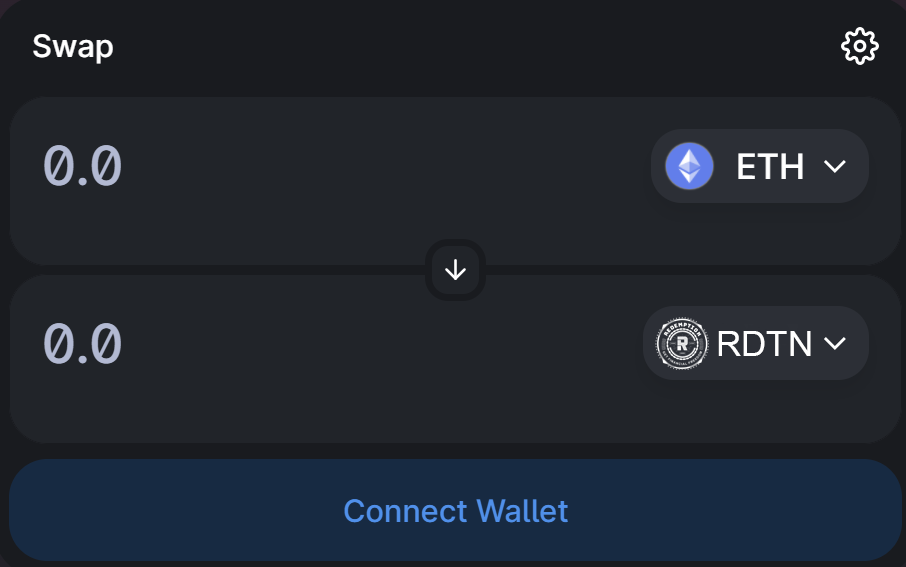
Go to PancakeSwap.finance/swap by clicking on the button “Get RDTN”. You will see the screen as given below.

<figure><img src="https://lh3.googleusercontent.com/Ywfdk0C80cNdEbRWE-h0EKad01XnP3v9GyCE78sIj-17f9uejVkYIhs8aBUr03dStr1fkHyMSVX9_uX5SAEpIIR5FN6sOOtfaQQL7xUFx59Luylws_hWU5VaeiSschpd52VAlarR5HcLbGDdeYduC4ndGFK8fjo4Kf6WS_c3c-6vDHBEQhWhi3J2LA" alt=""><figcaption></figcaption></figure>

**Next, follow these simple steps:**

### 1. Swap USDT with RDTN or Vice Versa

You can use the small arrow in the middle of the page to choose whether you want to swap RDTN with USDT or vice versa.

<figure><img src="/files/3imcy9fhYuJ3rLSOnB9k" alt=""><figcaption></figcaption></figure>

#### Connect to Wallet

Once the token is selected, click on the "Connect Wallet" under it. The button is also available in the top right corner of the screen.

<figure><img src="https://lh4.googleusercontent.com/Hwm8fxxmOPmDnw650u5plfP3MwGKRwv9iitn3HtCG5xKu9g1DQaIjR1PAmCgt6jqyxS3dTpC2sc_5ZIJU8eOeqECuaXdFA9yjbc0Ww1KzIx3tx9L0aRsAbR2RFoEq0FzlZpM3VzmQW-ryDQjP6IRBNTJCX3QEdWZeUS3ydGaIII7t3XuaDRiyewnGQ" alt=""><figcaption></figcaption></figure>

After clicking the “Connect Wallet” Button, a window will appear where you will have different wallet options like Metamark, WalletConnect, Fortmatic, Coinbase, Ports, etc. Choose the one as per your preference.

For this example, we will be choosing Metamask.

After that, a window will appear where you will have to choose the account that you want to use for that particular transaction. Once the account is selected, you can then proceed to the connection of the wallet.

**Your wallet is now connected. So Let us Do Some SWAPPING.**

Select the amount of USDT that you want to swap in order to get some RDTN.

**But before that, let us have a look at the settings on the top right corner of the pop up.**

It contains the following options.

#### Slippage Tolerance

It is the pricing difference between the price at the time of confirmation and the actual price of the transaction that the users are willing to accept. If you leave it on auto, Pancakeswap will set it for you. But you can also personally set it if you want.

#### Transaction Deadline

Here, you choose the maximum time for which our exchange operation stays on hold. Once the chosen deadline exceeds, it will be canceled if you have not set the transaction deadline properly.

#### Auto Router API

Once enabled, it uses PancakeSwap Labs API to get faster quotes.

#### Expert Mode

Only enable this mode if you are an expert in token crypto trading. It’s because expert mode allows you ultra-high spillage trades which may not be suitable for you especially is you are new to the field. So it’s better to keep it off.

### Coming back to the exchange,

Here’s how to make the exchange.

First, type in the amount of currency that you want to swap against Redemption token. You can also do the other way around by selecting the Redemption tokens to know how much USDT you need in order to get a specified number of RDTNs.

If you are ready for the transaction, then click on “Swap” button. After that, a confirmation window will pop up on your screen with some necessary information, much like a regular bank transaction.

Once double-checked, click on “Confirm Swap”.

A wallet window will be opened to ask for your confirmation. After confirmation, you will get your newly purchased tokens in your wallet.


# DAO

## Decentralized Autonomous Organization (DAO)

Redemption believes in decentralization. Its governance (decision-making body) is a DAO  (Decentralized Autonomous Organization) control structure consisting of token holders. The redemption token acts as a Governance token that gives voting rights to its holders.

The voting power of each token holder is directly proportional to the number of tokens possessed by that holder. So the more tokens you possess, the more voting power you have.&#x20;

Redemption has a dedicated forum where users can express their opinions, suggestions, and ideas for the betterment of the project.

### <mark style="color:green;">Eligibility to Create New Proposals</mark>

You need to have at least 100,000 tokens to be eligible for creating new proposals. But you have a voting right even if you possess 1 token.

***Note:** Some proposals for suggested changes may be subject to a technical/legal feasibility study before the actual implementation of such changes.*

**Let us understand how Redemption DAO works.**

Click on “DAO” on top bar.

Once landed on the page, you can launch the app by clicking on “Launch App” in the top right corner of the screen.

Then click on “Governance”.

<figure><img src="/files/lQE1vRITwlTk14S5N7ox" alt=""><figcaption></figcaption></figure>

If it’s your first time landing on this screen, you will have to click on "Self Delegates" to verify the number of tokens that you own. It will be used to calculate the weightage of your vote. It will also result in a small amount of Gas Fee. In case where you have more than one wallet, you will be repeating the same process with each one.

<figure><img src="/files/1qlYuzND283aQX8HaaH8" alt=""><figcaption></figcaption></figure>

After confirmation and clicking “Governance”, the following page will appear on your screen.

<figure><img src="/files/ELNkFY0vOXl3DTIsCTwV" alt=""><figcaption></figcaption></figure>

If there are any pending proposals, they will pop up on your screen. If there’s none, then you will find “No Proposals Found” on your screen.&#x20;

Below the message, there is a box named "past proposals". It shows you the DAO proposals that have been implemented.


# Functions of DAO

Redemption DAO will work through a decentralized decision-making process, where all token holders have the right to participate and vote on important decisions. The DAO will operate using smart contracts, which will execute predetermined actions based on the results of votes. The primary functions of Redemption DAO are to:&#x20;

* Manage the Redemption Treasury
* Operate the Redemption Lottery, Bonds, and Staking products
* Manage expenses incurred by the project
* Invest in profitable ventures to generate dividends for token holders
* Facilitate voting and governance by token holders
* Select and compensate guilds to manage various aspects of the project.


# Guilds, Their Selection & Compensation

Redemption DAO consists of several guilds responsible for managing different aspects of the project. These guilds will be selected and compensated by the DAO based on their performance and contribution to the project. The following are some of the guilds that the Redemption DAO has:

* <mark style="color:green;">**Treasury Management Guild:**</mark> This guild will be responsible for managing the Redemption Treasury, which includes revenue generated and expenses incurred by the project. They will ensure that the Treasury remains sustainable and has sufficient funds to meet the project's objectives.
* <mark style="color:green;">**Lottery Guild:**</mark> This guild will be responsible for operating the Redemption Lottery product. They will ensure that the lottery is fair and transparent and that the rewards are distributed to winners in a timely manner.
* <mark style="color:green;">**Bonds Guild:**</mark> This guild will be responsible for issuing and managing bonds on the Redemption platform. They will ensure that the collateral is sufficient and that the bonds are redeemed promptly.
* <mark style="color:green;">**Staking Guild:**</mark> This guild will be responsible for managing the Redemption Staking product. They will ensure that the staking rewards are fair and that the staking process is secure.
* <mark style="color:green;">**Investment Guild:**</mark> This guild will be responsible for identifying and investing in profitable ventures that generate dividends for token holders.
* <mark style="color:green;">**Marketing Guild:**</mark> This guild will be responsible for promoting the project by developing & executing marketing strategies, and managing social media and other communication channels to increase the adoption of Redemption's products, ultimately benefiting the entire DAO and its token holders.

### <mark style="color:green;">How Will Guilds Be Selected In DAO & How Will They Be Compensated?</mark>

Redemption DAO will select guilds based on their performance and contribution to the project. Guilds will submit proposals to the DAO, outlining their objectives, strategies, and expected outcomes. The DAO will then review and vote on the proposals, and the guilds with the highest votes will be selected.&#x20;

Guilds will be compensated based on their performance and contribution to the project. The DAO will allocate a portion of the Redemption Treasury to compensate guilds, and the amount will depend on the guild's scope of work, success rate, and overall contribution to the project. The compensation will be in the form of Redemption Tokens, and the guilds will be required to hold these tokens to ensure that their incentives are aligned with the project's objectives.

<br>


# Why Participate in The DAO?

* <mark style="color:green;">**Be the Owner:**</mark> DAOs are decentralized, meaning that they are not controlled by any one individual or entity. Every token holder has a say in the project proportional to the tokens held by them. So the more tokens you hold, the more voting power you have to manage the project.
* <mark style="color:green;">**Community-driven:**</mark> Redemption DAO is run by RDTN holders, who work together to make decisions and execute actions, creating a strong sense of community and fostering collaboration.&#x20;
* <mark style="color:green;">**Governance:**</mark> Participants in Redemption DAO have a say in how Redemption is run and what decisions are made. This democratic governance model allows for a more equitable distribution of power and resources.&#x20;
* <mark style="color:green;">**Create Proposals For Change:**</mark> Token holders can create new proposals or vote on the existing proposals, created by someone else. Let’s say someone wants to introduce new integrations to the project for better performance of the project. All other token holders will get this proposal and each token holder can vote on the proposal. If a total of 51% votes favor a decision, that decision is final.


# How DAO Voting Works

### <mark style="color:green;">Eligibility to Create New Proposals</mark>

You need to have at least <mark style="color:green;">**1,000 tokens**</mark> to be eligible for creating new proposals. But you have a voting right even if you possess 1 token.

<mark style="color:green;">**Note:**</mark> Some proposals for suggested changes may be subject to a technical/legal feasibility study before the actual implementation of such changes.&#x20;

### <mark style="color:green;">How Redemption DAO Voting Works?</mark>

1. <mark style="color:green;">**Proposal Creation:**</mark> As a token holder, you have the power to create a proposal for the DAO. All you need to do is submit a clear proposal description.
2. <mark style="color:green;">**Proposal Submission:**</mark> After you create a proposal, it will be submitted to the Snapshot (i.e, DAO's voting system). This will make it available for voting, and the system will record it.
3. <mark style="color:green;">**Discussion Period:**</mark> After submission, the discussion period starts during which members can discuss the proposal and provide feedback. This period typically lasts for a predetermined period of time, such as days or a week.
4. <mark style="color:green;">**Voting:**</mark> Now, all token holders can vote for or against the proposal using their tokens. The more tokens you hold, the more votes you have.
5. <mark style="color:green;">**Quorum:**</mark> Once the voting period ends, the system will tally the votes and determine whether the proposal has been accepted or rejected. The proposal will be accepted only if the number of votes in favor exceeds a specified threshold, i.e. 50% of the total tokens.
6. <mark style="color:green;">**Reality.eth Check:**</mark> Once the vote has closed and met the minimum quorum, it's time to take action. Using the Snapshot UI, you can "Request execution" in the "SafeSnap Execution" window. This initializes the reality.eth Oracle.
7. <mark style="color:green;">**Execution:**</mark> Once the proposal has passed, Reality.eth question has been resolved, and the 24-hour cooldown period is over, the Snapshot interface will have the option to trigger each of the multi-send transactions in the proposal. The Gnosis Safe will then execute each transaction in the proposal sequentially.

The execution of the New proposal has been described below in detail.

### <mark style="color:green;">Snapshot + Safe + Safesnap +Reality</mark>

Redemption Treasury uses a powerful Gnosis Safe smart contract wallet with multi-signature (multisig) functionality. This cutting-edge solution puts the power in your hands, enabling you to veto malicious transactions with the support of 12 multisig owners.

But that's not all. We've taken things to the next level with the integration of Gnosis Safe, Snapshot, and SafeSnap. With Snapshot, you can vote without worrying about gas fees. SafeSnap, on the other hand, is a Snapshot module that allows for on-chain execution of off-chain voting, giving you unparalleled control over the Gnosis Safe holding the Treasury funds.

While Reality is a tool developed by Gnosis Guild that allows for on-chain execution based on the outcomes of events reported by Reality.eth. It enables proposal execution from Snapshot.

Our team has thought of everything, including the proposals that call for payments from the treasury. These proposals must meet strict criteria, including filling out the "Transactions" container with information like transaction type, asset, recipient address, amount, etc.

Once the vote has closed and met the minimum quorum, it's time to take action. Using the Snapshot UI, you can "Request execution" in the "SafeSnap Execution" window. This initializes the reality.eth Oracle and kicks off a bonded escalation game. By putting up a bond of 0.1 ETH, you can set the outcome and identify the passing result of the Snapshot proposal.

The bonded escalation game has a 72-hour period, and anyone can challenge the outcome by putting up a bond double the size of the current one. If there's a challenge, the game restarts, and the 72-hour countdown begins.

Once the reality.eth bonded oracle resolves in favor of the proposal, there's a Timelock period of 72 hours. During this time, the Redemption Network DAO Treasury multi-sig owners can veto malicious transactions in a 2-of-4 fashion, giving you ultimate control over your staking.

After all the steps have successfully completed, the proposal will be executable, and new changes will take place in the project.&#x20;


# How Does DAO Treasury Work?

DAO Treasury is the backbone of Redemption. It manages the entire financial system of the project. In order to ensure its longevity, Redemption has designed several income streams for the Treasury to strengthen its ecosystem.&#x20;

* 3% Tax on every transaction will be charged and these fees will be directed to the treasury.
* A certain percentage of funds from any unwon lottery round will be added to the treasury.&#x20;
* The DAO will manage assets in the treasury and use these funds in profitable ventures to generate more profits. These profits will also increase the Treasury value over a period of time.&#x20;
* 10% Fee from every ticket sale will be collected in the Treasury which adds significant funds to the treasury.&#x20;
* In case of a need for emergency funds, the DAO can issue a limited amount of tokens at discounted rates to fund its operations without affecting the token price in the exchange.

<figure><img src="/files/aES0fLoPxASrgMeg3CPl" alt="How Redemption DAO Treasury Works? | Revenue and Income Sources of DAO Treasury"><figcaption></figcaption></figure>

### <mark style="color:green;">How Are Redemption Bonds Backed By The Treasury?</mark>

Redemption bonds are 100% backed by the assets in treasury. It means that you can redeem your bonds at any given time and they will be redeemed at their face value. If you redeem your bonds after maturity, you will also get a profit.&#x20;

The Redemption algorithm never issues bonds of more value than the assets in its treasury. Hence, the reserves of the Redemption Treasury back our bonds and provide assurance to the bondholders that their bonds are 100% safe and secure and are redeemable at any time.&#x20;

&#x20;


# Funds Management With Multisig Wallets

The DAO Treasury is an important part of this ecosystem, providing funding for the development of the project and enabling community-driven decision making.

To ensure the security of the DAO Treasury, a multi-signature (multisig) wallet will be used. This means that multiple individuals will be required to sign off on transactions before they can be executed.

### <mark style="color:green;">Multisig Wallet Operation Workflow</mark>

1. <mark style="color:green;">**Creation of Multisig Wallet:**</mark> The multisig wallet will be created with a predetermined number of keys required to sign off on transactions. For example, a 3-of-5 multisig wallet will require 3 out of the 5 authorized individuals to sign off on a transaction before it can be executed.
2. <mark style="color:green;">**Keyholders:**</mark> The individuals who hold the keys to the multisig wallet will be chosen through a community-driven process. The community will be able to nominate and vote for keyholders, based on their expertise, contribution, and trustworthiness.
3. <mark style="color:green;">**Key Distribution:**</mark> The keys will be distributed among the keyholders, ensuring that no single individual has full control over the multisig wallet.
4. <mark style="color:green;">**Transaction Execution:**</mark> To execute a transaction from the multisig wallet, the required number of keyholders must sign off on the transaction using their keys. This ensures that no individual can execute a transaction without the approval of the other keyholders.
5. <mark style="color:green;">**Security Measures:**</mark> To enhance the security of the multisig wallet, additional security measures such as time locks and transaction limits can be implemented.

### <mark style="color:green;">Choosing the Keyholders</mark>

To choose the key holders of the Redemption DAO Treasury's multisig wallets, the community will follow the below process:

1. The community will nominate individuals who they think are trustworthy and have the necessary skills and expertise to manage the treasury's funds.
2. The nominated individuals will then be vetted by the community to ensure that they meet the required standards.
3. Once vetted, the community will vote for the final key holders of the multisig wallets.
4. The key holders will be chosen based on the number of votes they receive from the community.
5. The chosen key holders will have the power to sign transactions and make decisions about the Redemption DAO Treasury's funds.

The above process ensures that the key holders of the Redemption DAO Treasury's multisig wallets are chosen through a fair and transparent process. It also ensures that the community has a say in who holds the keys to the treasury's funds. This way, the Redemption DAO Treasury's funds will be safe and secure, and the community can trust that their investments are in safe hands.

### <mark style="color:green;">To Sum Up</mark>

The Redemption DAO Treasury will be operated using a multisig wallet, with multiple individuals holding the keys to ensure that no single individual has complete control over the funds. The keyholders will be chosen through a community-driven process based on their expertise, contribution, and trustworthiness.&#x20;

By implementing additional security measures, we can ensure the safety and integrity of the DAO Treasury, enabling the community to continue driving the development of the Redemption ecosystem.


# Funds Allocation to Guilds

The DAO Treasury will allocate funds/budgets to different guilds in the following manner:

1. The DAO treasury will collect funds from various sources like lottery ticket sales, bond sales, token sales, and staking rewards.
2. The treasury committee, consisting of community-elected financial experts, will evaluate the available funds and decide on the allocation percentage for each guild based on their respective needs and objectives.
3. The allocated funds will be transferred to each guild's respective multisig wallet.
4. Each guild's executive members, consisting of community-elected representatives, will be responsible for managing the funds within their guild according to the guild's objectives and plans.
5. Regular financial reports and audits will be conducted to ensure transparency and accountability in the allocation and use of funds by each guild.
6. Any excess funds from any guild will be transferred back to the DAO treasury for allocation in the next budget cycle.

This mechanism will ensure that the funds are allocated efficiently and transparently to support the growth and success of each guild within the Redemption DAO ecosystem.

### <mark style="color:green;">How Guilds Can Spend The Funds?</mark>

Each guild will have its own set of guidelines and policies in place to ensure responsible spending. Additionally, the guilds will need to provide regular updates and reports on their spending activities to the DAO and the community to maintain transparency and accountability.

The approval process for guild spending proposals will follow the DAO's governance system, which will involve community members voting on proposals through a decentralized voting mechanism. This ensures that the community has a say in how the DAO's funds are allocated and that the decisions are made in a decentralized and democratic way.


# How To Vote?

If you see any pending proposals, here is how to vote on them.

1. Connect your wallet by clicking on the top right button.

<figure><img src="/files/gd9jruCoGE2SE5UPaibv" alt=""><figcaption></figcaption></figure>

2\. Then follow the same steps, as previously discussed in “How To Get RDTN” section, to connect your wallet. After that, you will the following screen.

<figure><img src="/files/ImqzYAmWKY8B4JJGhldK" alt=""><figcaption></figcaption></figure>

3\. There is a box named “Active Proposals” where you will find all the pending proposals, if any, that are waiting for your vote. From there you can vote in favor or against the proposal.

4\. You can also click on “Create Proposal” to create a new proposal if you have any viable suggestions. But for that, you must hold a specified number of tokens in your wallet.


# Invest in Pre-IDO

### <mark style="color:green;">Invest Early to Make Maximum Profit</mark>

Be an early adopter of the Redemption token! You will profit even on the day of the token launch as you can currently get RDTN at discounted rates. Be ahead of the game and join Redemption today!

| *<mark style="color:green;">**Lifecycle Stage**</mark>* | *<mark style="color:green;">**Token Price (Per RDTN)**</mark>* | *<mark style="color:green;">**Profit (at Token Launch)**</mark>* |
| ------------------------------------------------------- | -------------------------------------------------------------- | ---------------------------------------------------------------- |
| ***Private Sale (Pre-IDO)***                            | $ 0.015                                                        | -                                                                |
| ***Exchange Rate on IDO***                              | $ 0.019                                                        | 26.7%                                                            |


# Why Invest in Pre-IDO?

| *<mark style="color:green;">**Invest Without Cash**</mark>*                                                                                                                           | *<mark style="color:green;">**Discounted Rates - More Profit**</mark>*                                                                                | *<mark style="color:green;">**Book Profit on Listing**</mark>*                                                                                                                             | *<mark style="color:green;">**Redemption Through Buy-Back**</mark>*                                                                                                                          |
| ------------------------------------------------------------------------------------------------------------------------------------------------------------------------------------- | ----------------------------------------------------------------------------------------------------------------------------------------------------- | ------------------------------------------------------------------------------------------------------------------------------------------------------------------------------------------ | -------------------------------------------------------------------------------------------------------------------------------------------------------------------------------------------- |
| Yes, you heard it right. You can earn a commission by referring new investors. The more investors you bring, the more commission you get, hence increasing your stake in the project. | Purchase Redemption tokens now and enjoy over 26.7% profit on IDO. While holding after IDO will make you 26.7% more profitable than IDO participants. | As an early investor, you can securely store your Redemption tokens in your crypto wallet and convert them into fiat money on profit once the token is listed on a decentralized exchange. | With our unique Redeem option, you have the flexibility to exercise the buy-back option for select tokens even before their official listing, ensuring greater control and potential profit. |


# How to Buy Redemption Before IDO?

Following are the steps to purchase Redemption Tokens before the token has been listed on any Exchange.

1. Join the Waitlist
2. Complete Registration and Secure Login
3. Complete KYC and Payment
4. Wait for Verification Complete Message (24 to 48 Hours)
5. View Your Block Crypto Wallet Details and Redemption Tokens.

<figure><img src="/files/Ah6jAXxosDujQ9dhDvrg" alt="How To Purchase Redemption Tokens (RDTN) Before Launch/IDO"><figcaption></figcaption></figure>